


You may also like
-

Diagrammi nro 5 Juliste
Hiram Erastus Butler · 1887 · avaruuskaaviojuliste joka esittää planeettojen kiertokulut selkeällä mustalla viivatyöllä ja tarkalla graafisella typografialla
Juliste €9 · Kehystetty €16
-

Diagrammi nro 6 Juliste
Hiram Erastus Butler · 1887 · taivaallinen diagrammijuliste joka esittää planeettasyklit yksityiskohtaisilla renkailla ja merkinnöillä
Juliste €9 · Kehystetty €16
-

Diagrammi nro 3 Juliste
Hiram Erastus Butler · 1887 · esoteerinen horoskooppianatomiajuliste, selkeä grafiikka ja tarkat merkinnät herättävät mielen
Juliste €9 · Kehystetty €16
-

Läpinäkyvä aurinkokuntajuliste
James Reynolds · 1851 · yksityiskohtainen aurinkokuntajuliste, jossa merkityt radat, käsinvärjätyt planeettakorostukset ja opetuksellinen selkeys
Juliste €9 · Kehystetty €16


-

'Todella hienot julisteet. Laatu on upea, ja saimme tilauksen tosi nopeasti !'
-

'Tässä putiikissa kannattaa ehdottomasti käydä. Julisteita on valtavasti. Vietimme siellä yli tunnin!'
-

'Täydellinen paikka löytää lahja. Hinnat ovat todella hyvät. Ja he voivat kehystää ja pakata sen paikan päällä'
Taiteilijasta
Hiram Erastus Butler oli 1800-luvun lopun amerikkalainen kirjoittaja ja luennoitsija, joka tarkasteli astronomian ja metafyysisen ajattelun risteyskohtaa. Aikakausi, jota kiinnostivat maailmankaikkeuden arvoitukset, innosti Butleria tekemään abstraktit taivaskonseptit ymmärrettäviksi laajemmalle yleisölle kirjoitusten ja visuaalisten diagrammien kautta. Hänen työssään heijastuu viktoriaaninen innostus tieteelliseen löytämiseen ja halu etsiä syvempää merkitystä universumin kuvioista
Butlerin diagrammit kuuluvat laajempaan liikkeeseen, jonka tavoitteena oli popularisoida tiedettä: opetuskaaviot ja levyt olivat tuohon aikaan olennaisia välineitä sekä opetuksessa että pohdiskelussa. Hänen perintönsä elää niiden silmissä, jotka arvostavat tieteellisen tutkimuksen ja filosofisen spekulaation yhdistelmää, kuten nähdään kokoelmissa kuten tieteelliset julisteet ja esoteeriset julisteet
Teos
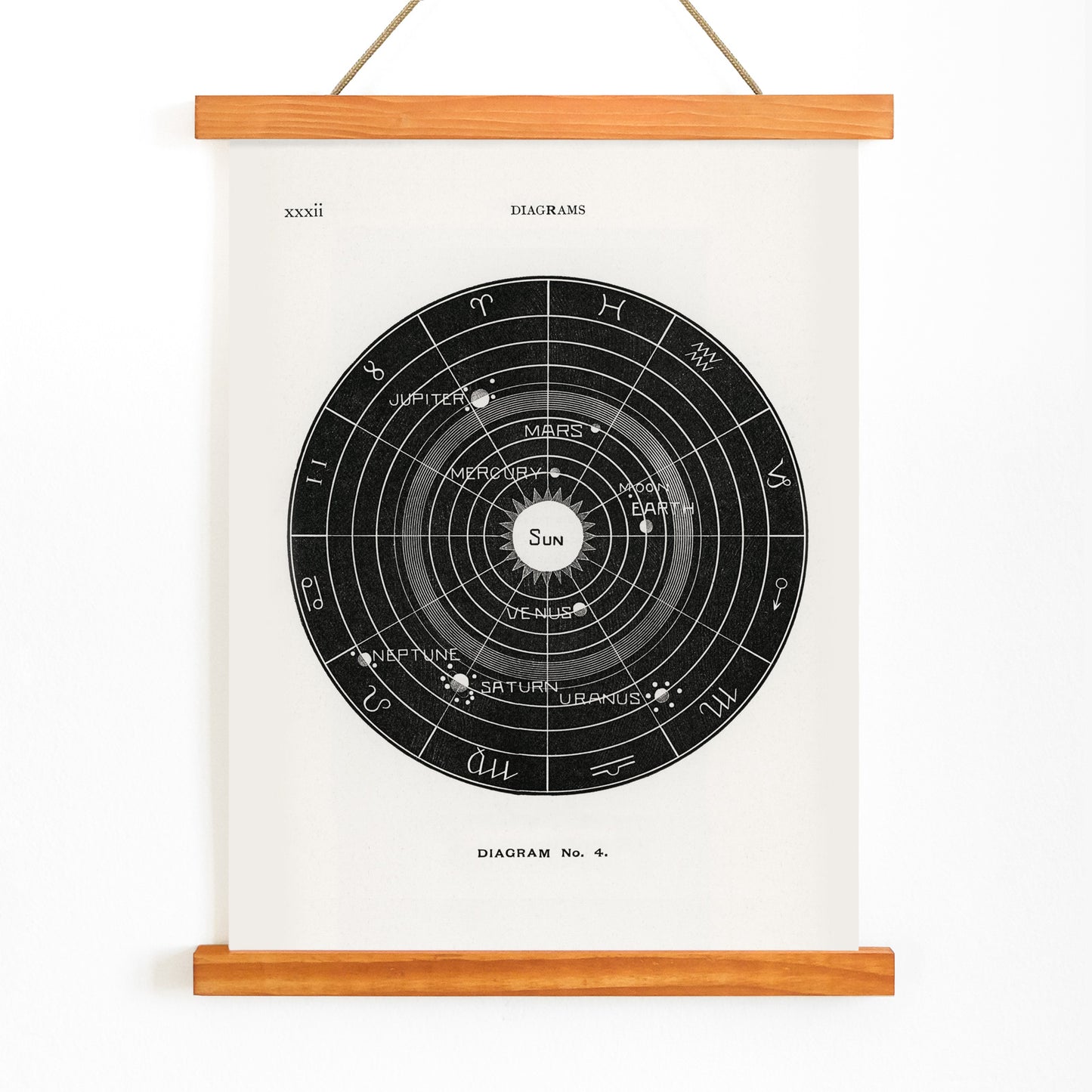
Tämä diagrammi, luotu vuonna 1887 osana Butlerin Solar Biology -järjestelmää, pyrki selittämään ihmisen luonnetta ja kohtaloa taivaankappaleiden syklien ja suhteiden avulla. Kuvallisena apuvälineenä kaavio tiivistää monimutkaiset astronomiset ja metafyysiset ideat helposti viitattavaan ja tutkittavaan muotoon
Aikansa kontekstissa tällaiset diagrammit olivat paitsi opettavaisia myös auktoriteetin leimaamia, sillä ne yhdistivät tieteellisen tiedon ja spekulatiivisen kosmologian. Tämä teos heijastaa viktoriaanista pyrkimystä kartoittaa taivasta tavalla, joka kutsuu sekä järkiperäiseen analyysiin että mielikuvitukselliseen pohdintaan, ja resonoi niiden kanssa, joita kiinnostaa avaruusteemainen seinätaide
Tyyli ja ominaispiirteet
Teos koostuu huolellisesti piirretyistä konsentrisista renkaista, kaarista ja täsmällisistä säteittäisistä viivoista, kaikki järjestetty matemaattisen järjestyksen mukaan. Pienet, selkeät selitteet ja tarkoin mitoitettu etäisyys antavat sille tunnusomaisen viitekaavamaista ilmettä, jossa selkeys ja luettavuus ovat etusijalla
Väripaletti on ankara mustavalkoinen, korostaen voimakasta kontrastia ja arkistomaista täsmällisyyttä. Tunnelma on mietiskelevä ja kurinalainen; diagrammin puhdas geometria antaa sille ajattoman, lähes modernin laadun. Teos istuu luontevasti mustavalkoisen seinätaiteen perinteeseen ja sopii erityisesti tiloihin, joissa arvostetaan selkeää visuaalista kieltä, kuten mustavalkoinen seinätaide
Sisustuksessa
Tämä vintagehenkinen tieteellinen juliste sopii erinomaisesti työhuoneisiin, kotitoimistoihin, kirjastoihin tai käytäville, joissa katsojat voivat pysähtyä ja tarkastella sen logiikkaa ja rakennetta. Graafinen selkeys täydentää moderneja, minimalistisia ja teollishenkisiä sisustuksia sekä eklektisiä kokoelmia, jotka ammentavat uteliaisuuskabineteista
Monokromaattinen ilme sulautuu vaivattomasti valkoisiin seiniin, tummiin kehyksiin ja luonnonpuuhun, mikä tekee siitä monipuolisen valinnan gallerioseinille, joiden teema liittyy tiedeeseen, astronomiaan tai esoteeriseen historiaan. Sen rauhallinen geometria vetoaa niihin, jotka arvostavat harkittua muotoilua koristeellisen yltäkylläisyyden sijaan