
 "Beautiful prints, fast shipping !"
 "Amazing vintage poster selection"
 "A hidden gem for art lovers"
"Beautiful prints, fast shipping !"
"Amazing vintage poster selection"
"A hidden gem for art lovers"
"Beautiful prints, fast shipping !"
"Amazing vintage poster selection"
"A hidden gem for art lovers"
"Beautiful prints, fast shipping !"
"Amazing vintage poster selection"
"A hidden gem for art lovers"
"A hidden gem for art lovers"
"Beautiful prints, fast shipping !"
"Amazing vintage poster selection"
"A hidden gem for art lovers"
"Beautiful prints, fast shipping !"
"Amazing vintage poster selection"
"A hidden gem for art lovers"
"Beautiful prints, fast shipping !"
"Amazing vintage poster selection"
"A hidden gem for art lovers"




New Arrivals
-

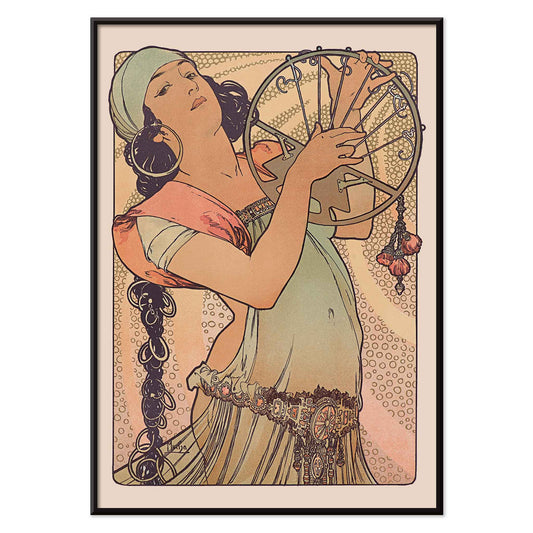
Salomé Poster
Alphonse Mucha · 1897 · Salomé becomes an Art Nouveau poster with a tambourine and flowing ornament
Poster from €9 · Framed from €16
-

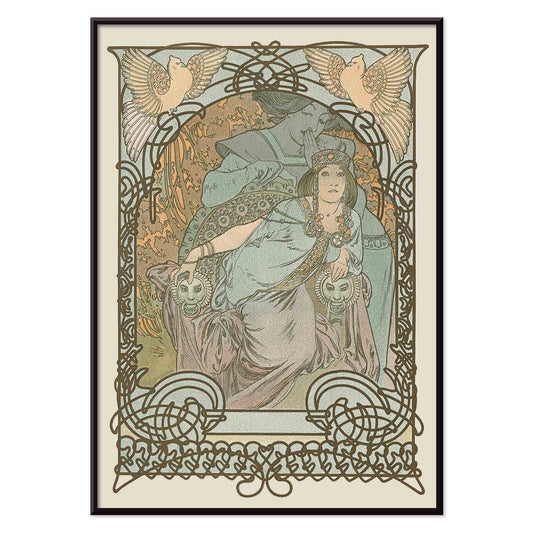
Ilsee Princesse de Tripoli Poster
Alphonse Mucha · 1897 · Art Nouveau poster of a Tripoli princess in a decorative vertical scene
Poster from €9 · Framed from €16
-

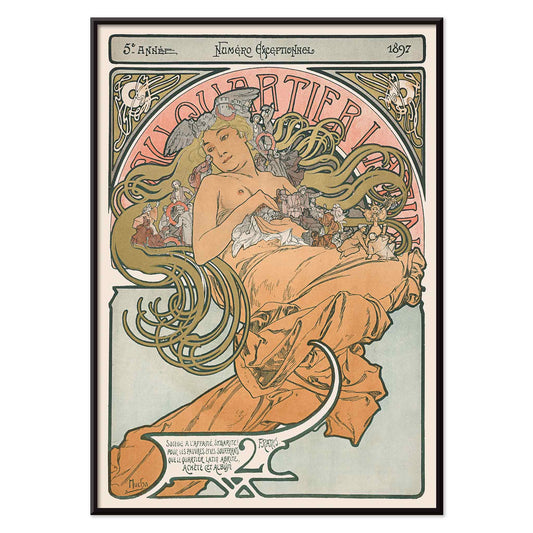
Au Quartier Latin 2 Poster
Alphonse Mucha · 1897 · Art Nouveau poster with a reclining figure and flowing floral curves
Poster from €9 · Framed from €16
-

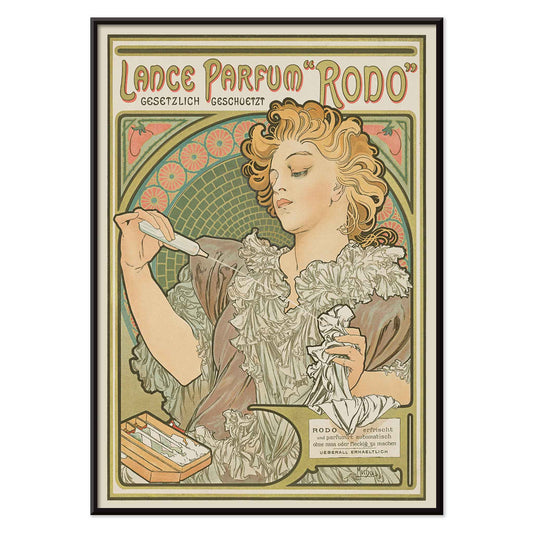
Lance parfum Rodo poster Poster
Alphonse Mucha · 1896 · Art Nouveau poster with a perfume muse and ornamental lettering
Poster from €9 · Framed from €16
-

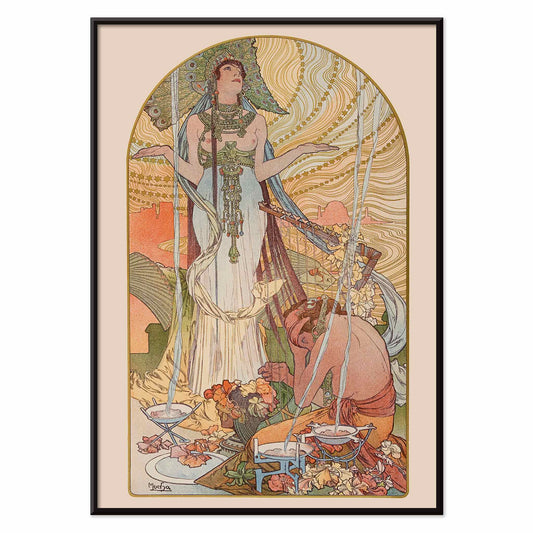
Salammbô: The Incantation Poster
Alphonse Mucha · 1897 · Art Nouveau poster of Salammbô in a vertical ritual scene
Poster from €9 · Framed from €16
-

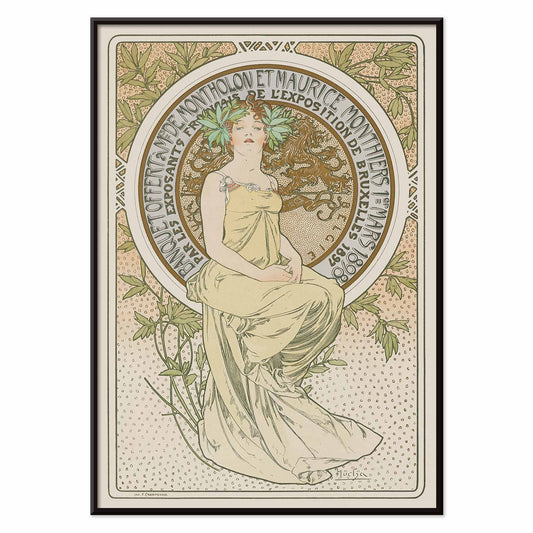
Exposition de Bruxelles Poster
Alphonse Mucha · 1897 · Art Nouveau poster for Exposition de Bruxelles with a seated figure
Poster from €9 · Framed from €16
-

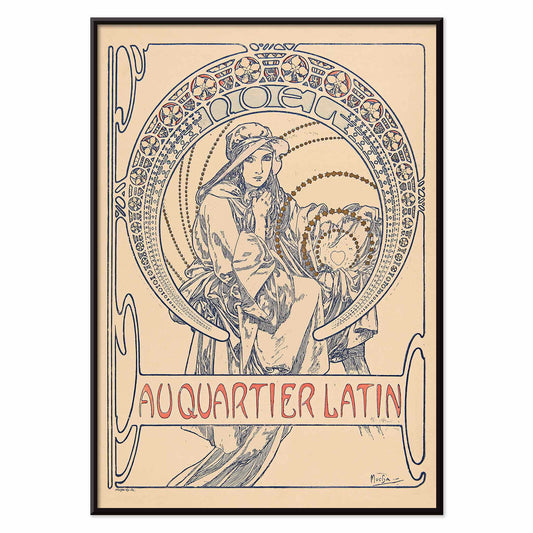
Au Quartier Latin Poster
Alphonse Mucha · 1900 · Art Nouveau poster with a poised figure and ornate circular framing
Poster from €9 · Framed from €16


-

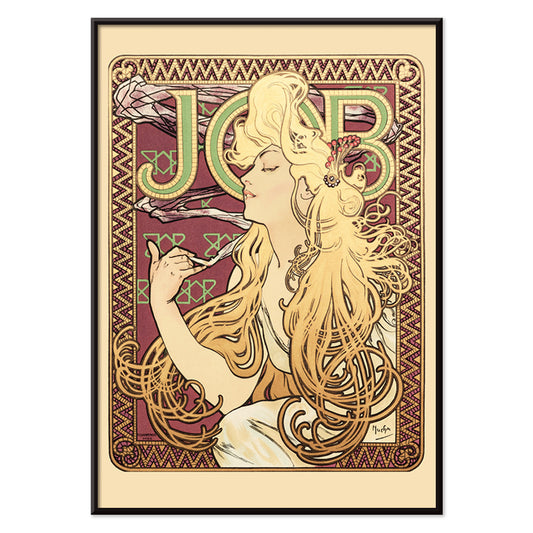
Job by Mucha Poster
Alphonse Mucha · 1896 · Iconic Art Nouveau advertising poster with a sensual profile and cascading ornamental hair
Poster from €9 · Framed from €16
-

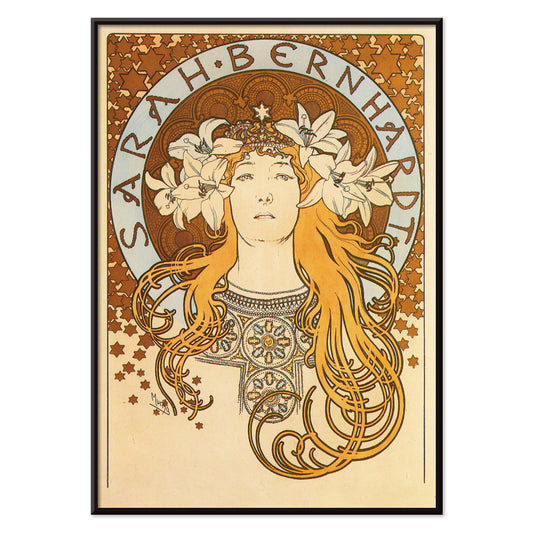
Sarah Bernhardt Poster
Alphonse Mucha · 1896 · Ornate Art Nouveau poster of Sarah Bernhardt framed by lilies and flowing hair
Poster from €9 · Framed from €16
-

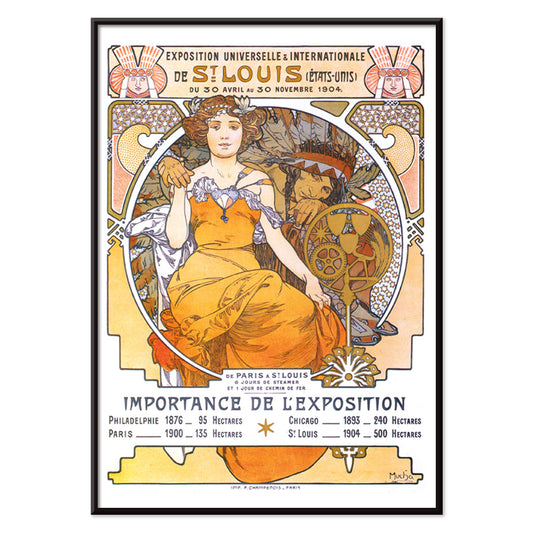
Exposition de Saint Louis Poster
Alphonse Mucha · 1904 · Elegant Art Nouveau poster featuring allegorical figures and ornate lettering in warm golden tones
Poster from €9 · Framed from €16
-

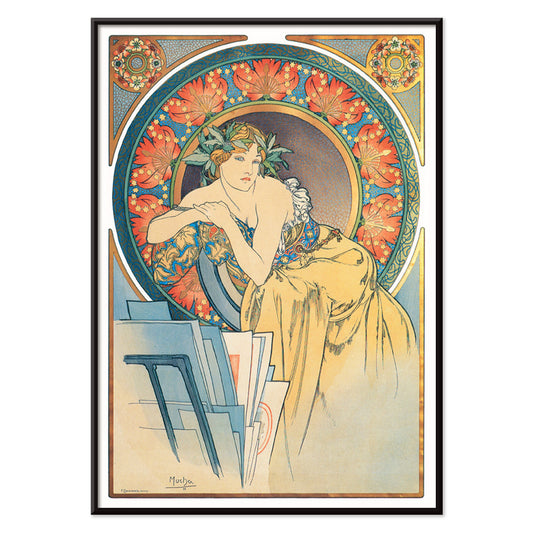
Woman with poppies by Alphonse Mucha Poster
Alphonse Mucha · 1899 · Elegant Art Nouveau poster featuring a tranquil woman encircled by vivid red poppies
Poster from €9 · Framed from €16
-

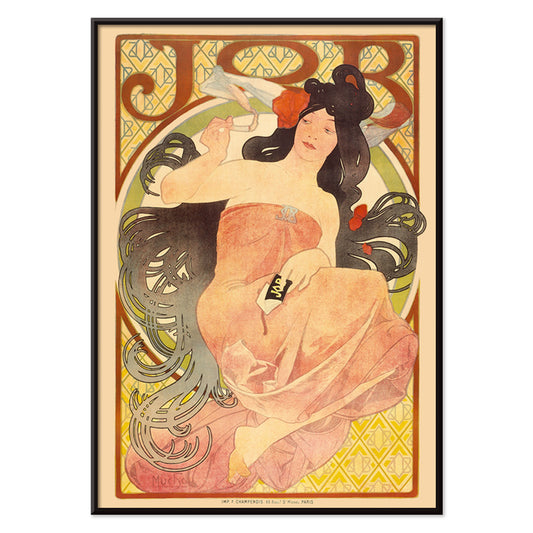
Job Paper Poster
Alphonse Mucha · 1897 · Iconic Art Nouveau poster of a serene woman smoking framed by flowing hair
Poster from €9 · Framed from €16
-

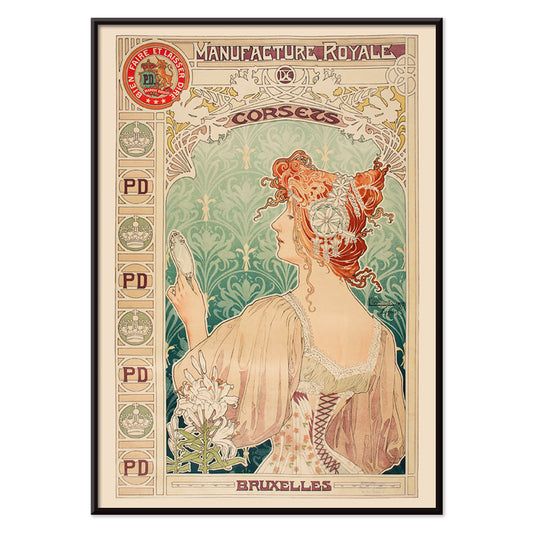
Manufacture Royale De Corsets Poster
Alphonse Mucha · 1897 · Art Nouveau corsetry poster with flowing lines and botanical ornament in warm tones
Poster from €9 · Framed from €16
-


Riz Abadie Poster
Alphonse Mucha · 1898 · Elegant Art Nouveau poster featuring a graceful woman framed by ornate floral ornament
Poster from €9 · Framed from €16
-


Chocolat Idéal Poster
Alphonse Mucha · 1897 · Art Nouveau chocolate poster with a serene muse and ornate floral framing
Poster from €9 · Framed from €16
-

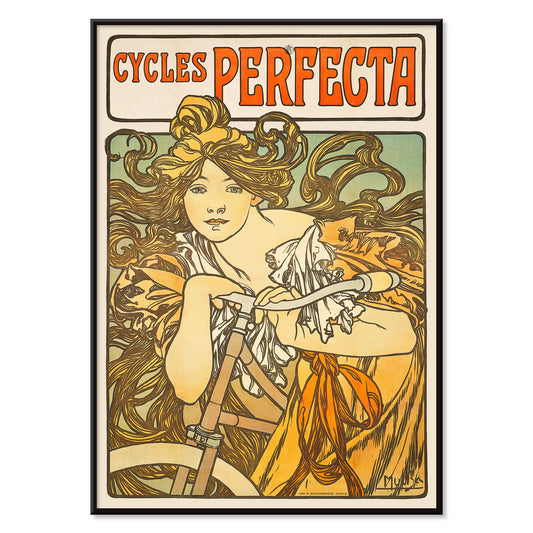
Cycles Perfecta Poster
Alphonse Mucha · 1897 · Art Nouveau bicycle poster with radiant muse, floral halo, and ornate lettering
Poster from €9 · Framed from €16
-
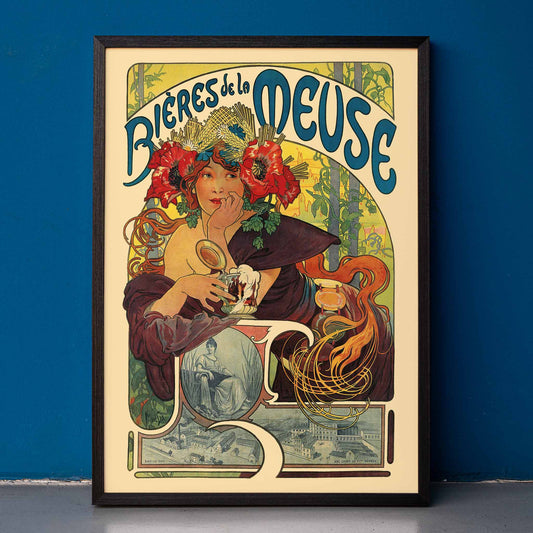
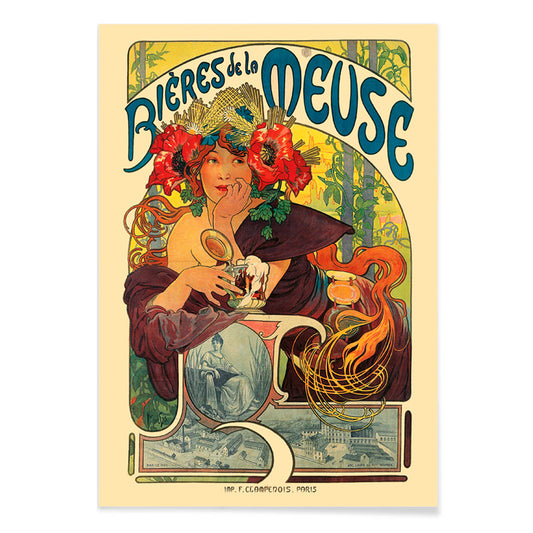
Bières De La Meuse Poster
Alphonse Mucha · 1897 · Radiant Art Nouveau beer poster featuring a flower-crowned muse and swirling hair
Poster from €9 · Framed from €16
-
Au Quartier Latin Poster
Alphonse Mucha · 1900 · Art Nouveau poster with a poised figure and ornate circular framing
Poster from €9 · Framed from €16
-
Exposition de Bruxelles Poster
Alphonse Mucha · 1897 · Art Nouveau poster for Exposition de Bruxelles with a seated figure
Poster from €9 · Framed from €16
-
Salammbô: The Incantation Poster
Alphonse Mucha · 1897 · Art Nouveau poster of Salammbô in a vertical ritual scene
Poster from €9 · Framed from €16
-
Lance parfum Rodo poster Poster
Alphonse Mucha · 1896 · Art Nouveau poster with a perfume muse and ornamental lettering
Poster from €9 · Framed from €16
-
Au Quartier Latin 2 Poster
Alphonse Mucha · 1897 · Art Nouveau poster with a reclining figure and flowing floral curves
Poster from €9 · Framed from €16
-
Ilsee Princesse de Tripoli Poster
Alphonse Mucha · 1897 · Art Nouveau poster of a Tripoli princess in a decorative vertical scene
Poster from €9 · Framed from €16
-
Salomé Poster
Alphonse Mucha · 1897 · Salomé becomes an Art Nouveau poster with a tambourine and flowing ornament
Poster from €9 · Framed from €16


Belle Époque street poetry
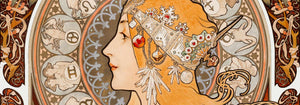
In Paris at the turn of the twentieth century, the poster became a public stage. Walls, kiosks, and café corridors carried a new visual language: bold letterforms, flattened colour, and figures large enough to read from a moving carriage. Alphonse Mucha’s Art Nouveau imagery sits at the centre of that moment, turning advertising into civic theatre. These vintage posters are built from sinuous line, floral rhythm, and medallion-like framing that slows the eye, then rewards it with detail. For a wider context of the era’s commercial graphics, pair the mood with Advertising and the broader artist landscape in Famous Artists.
Lithography, line, and the modern muse
Mucha’s work relied on colour lithography, a process that encouraged clean separations of tone and crisp outlines. That technical base supports his signature balance: flat fields of colour held in place by calligraphic contour, with ornament used as structure rather than background noise. In Job (1897) by Alphonse Mucha, hair, smoke, and circular cartouche lock together like interlaced motifs, suggesting motion while keeping the composition still. Manufacture Royale De Corsets (1897) by Alphonse Mucha shifts toward precision, where lacing and embroidered borders become an excuse for pattern and tactile illusion. If you want to see how decorative line travels across media, it resonates naturally with the repeating motifs of William Morris prints.
Living with ornament at home
Use these art prints as a palette anchor. Mucha’s creams and ochres sit comfortably with walnut, rattan, and aged brass; his greens and violets harmonise with painted cabinetry, glazed tile, and patinated metal. In an entryway, a tall poster reads like a welcoming proscenium; in a dining room, it works as narrative in place of a mirror. For a lighter, nature-led counterpoint, weave in quiet studies from Botanical. If a room already has strong pattern, keep adjacent pieces restrained through Black & White so the Art Nouveau line can remain legible rather than competing with other rhythms.
Curating sets, spacing, and frames
A practical way to curate a gallery wall is to follow Mucha’s repeated circles: halos, medallions, wreaths, wheel arcs. Cycles Perfecta (1897) by Alphonse Mucha is especially useful for this, since the bicycle geometry echoes the border and the pose, making it an easy bridge to the graphic silhouettes in Bike. For a more domestic register, Chocolat Idéal (1897) by Alphonse Mucha softens the advertising voice with steam, gesture, and a gentler scene. Give ornate compositions more margin than you think: generous matting and consistent sightlines keep the linework crisp. When selecting mouldings, coordinate with Frames to maintain calm edges around dense ornament.
Why the posters still feel current
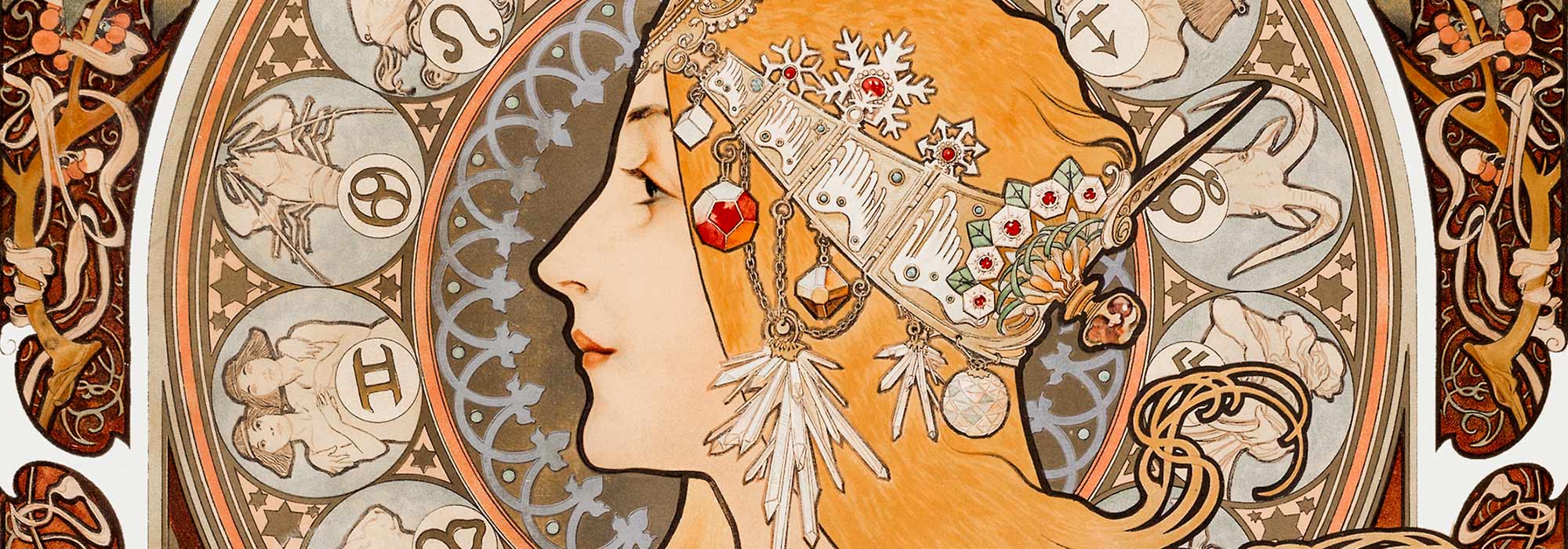
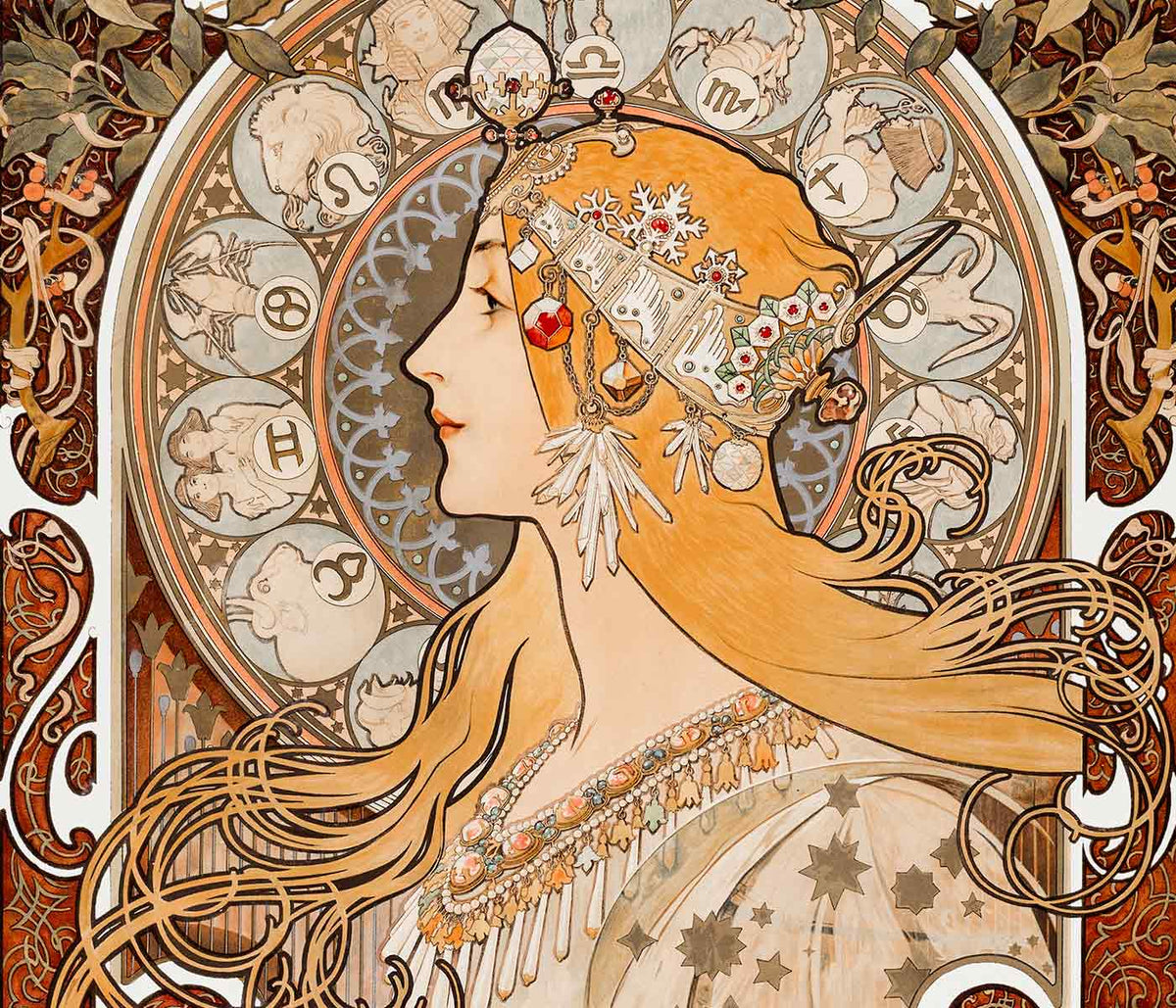
Mucha’s lasting relevance comes from his clarity as a designer: figure, typography, and framing work as one system, so the image reads instantly yet invites close looking. In Sarah Bernhardt / La Plume by Alphonse Mucha, the face remains serene while the surrounding florals and lettering build a stage set on paper, equal parts portrait and graphic architecture. Seen today, these vintage posters operate as wall art with social history embedded in the layout, bridging classic art and the modern poster tradition.