
 "Beautiful prints, fast shipping !"
 "Amazing vintage poster selection"
 "A hidden gem for art lovers"
"Beautiful prints, fast shipping !"
"Amazing vintage poster selection"
"A hidden gem for art lovers"
"Beautiful prints, fast shipping !"
"Amazing vintage poster selection"
"A hidden gem for art lovers"
"Beautiful prints, fast shipping !"
"Amazing vintage poster selection"
"A hidden gem for art lovers"
"A hidden gem for art lovers"
"Beautiful prints, fast shipping !"
"Amazing vintage poster selection"
"A hidden gem for art lovers"
"Beautiful prints, fast shipping !"
"Amazing vintage poster selection"
"A hidden gem for art lovers"
"Beautiful prints, fast shipping !"
"Amazing vintage poster selection"
"A hidden gem for art lovers"

















-

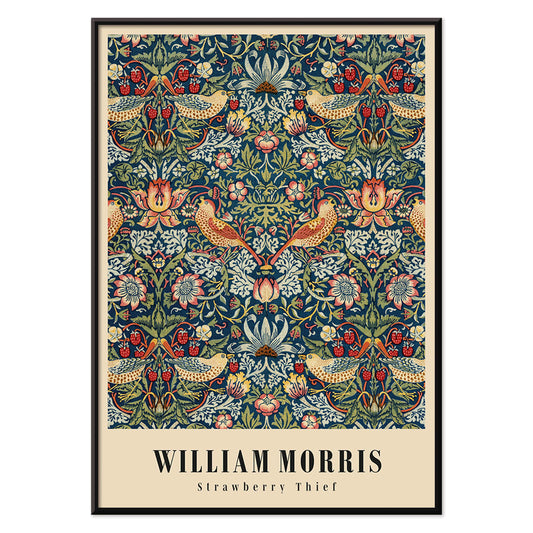
Strawberry Thief Poster
William Morris · 1883 · Iconic Arts and Crafts poster with thrushes, strawberries, and scrolling foliage in rich blues
Poster from €9 · Framed from €16
-

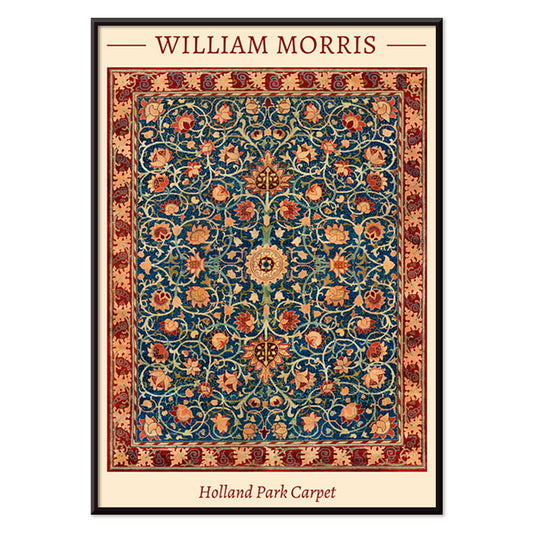
Holland Park Carpet Poster
William Morris · 1856 · Ornamental floral poster featuring rhythmic vines and medallion blooms in blue and red
Poster from €9 · Framed from €16
-

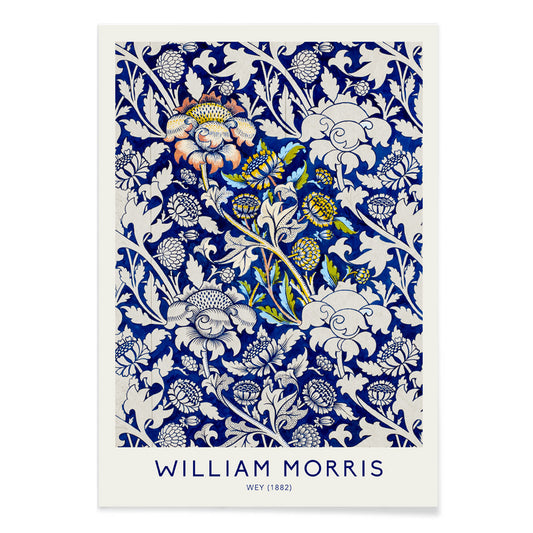
Wey Poster
William Morris · 1882 · Arts and Crafts floral print in cool blue tones with lively botanical rhythm
Poster from €9 · Framed from €16
-

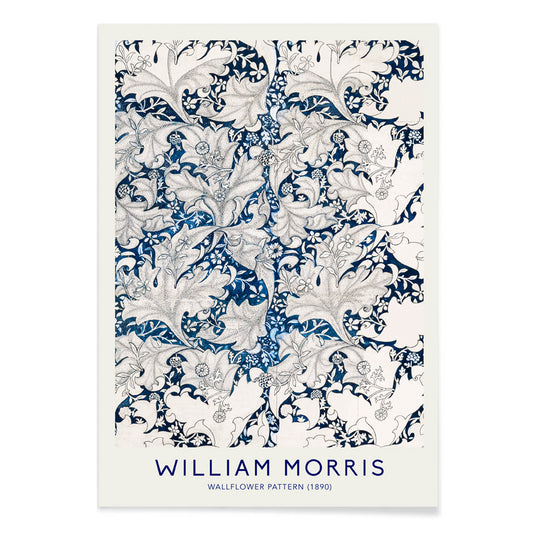
Wallflower Pattern Poster
William Morris · 1890 · Blue-and-white floral print featuring stylized blossoms and vines in Arts and Crafts style
Poster from €9 · Framed from €16
-
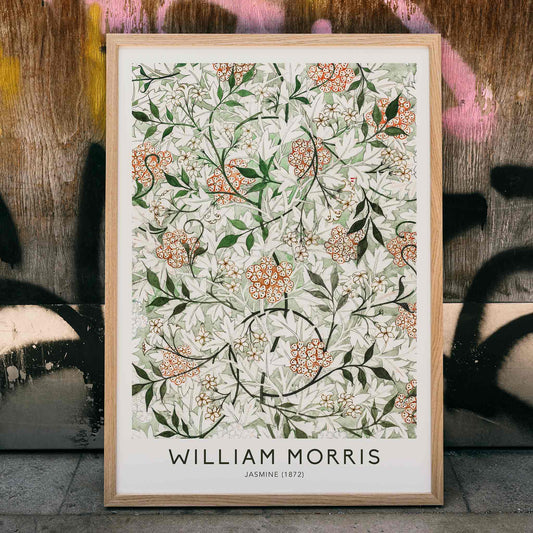
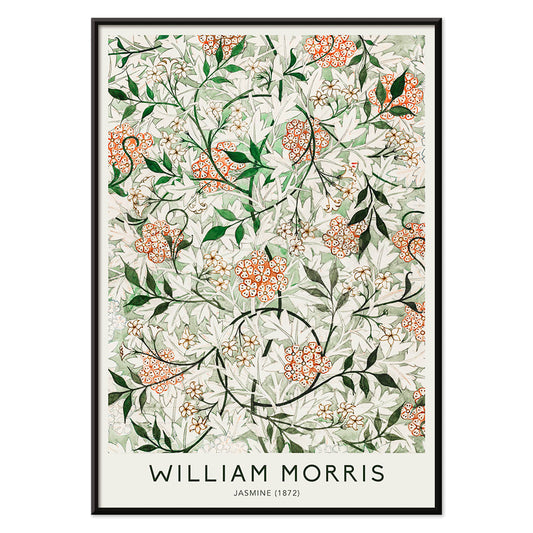
Jasmine Poster
William Morris · 1872 · Ornamental jasmine vine print with dense green leaves and pale blossoms in rhythmic repeat
Poster from €9 · Framed from €16
-

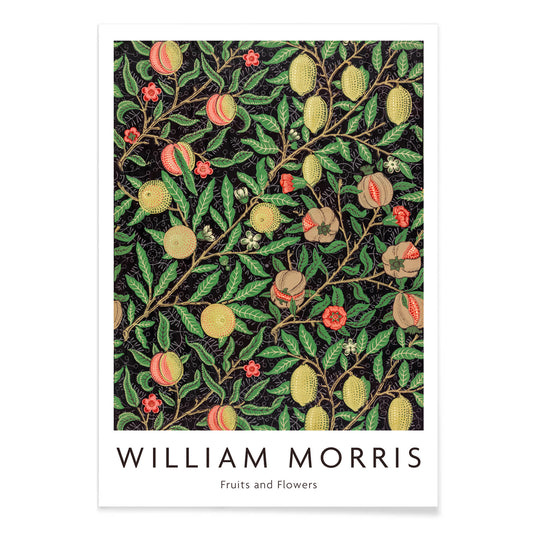
Fruit pattern Poster
William Morris · 1862 · Lush fruit and leaf pattern print with rhythmic vines on a deep ground
Poster from €9 · Framed from €16
-


Willow bough Poster
William Morris · 1887 · Flowing willow-branch print with repeating leaves and calming Arts and Crafts rhythm
Poster from €9 · Framed from €16
-

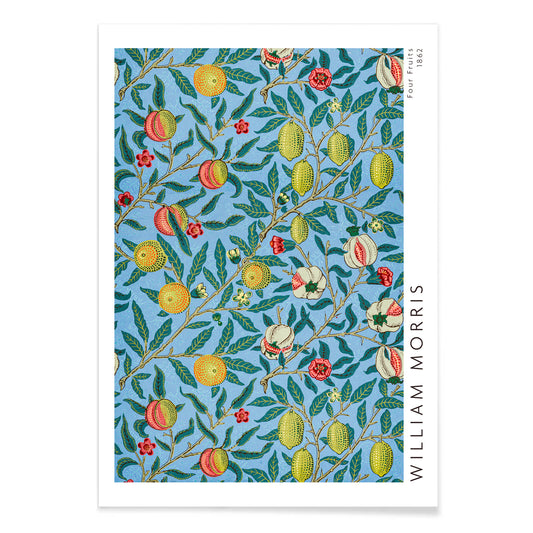
Four fruits pattern Poster
William Morris · 1862 · Lush fruit and foliage poster featuring interlacing leaves and rich blue backgrounds
Poster from €9 · Framed from €16
-


Violet and Columbine Poster
William Morris · 1883 · Ornamental floral print weaving violets and columbine into a dense garden pattern
Poster from €9 · Framed from €16
-

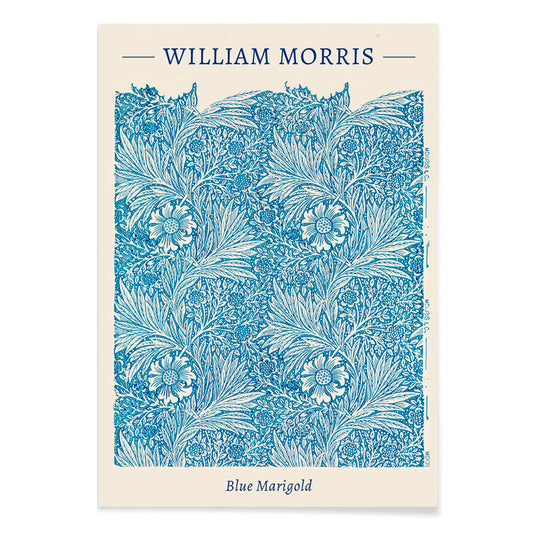
Blue marigold Poster
William Morris · 1875 · Intricate blue floral art print with marigold blooms in rhythmic Arts and Crafts pattern
Poster from €9 · Framed from €16
-

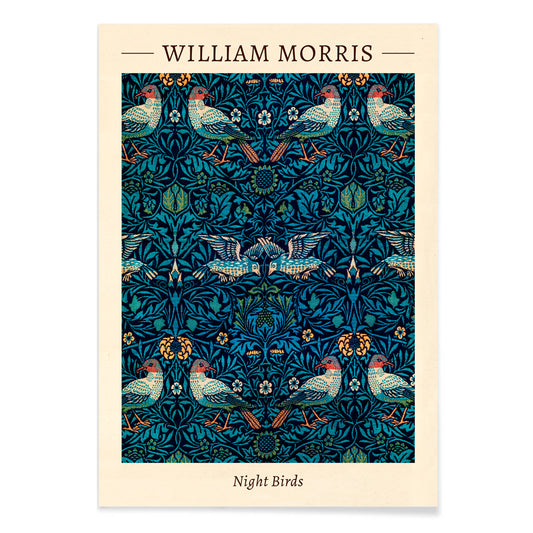
Night Birds Poster
William Morris · 1887 · Ornamental print of nocturnal birds and entwined foliage in deep blue-green tones
Poster from €9 · Framed from €16
-

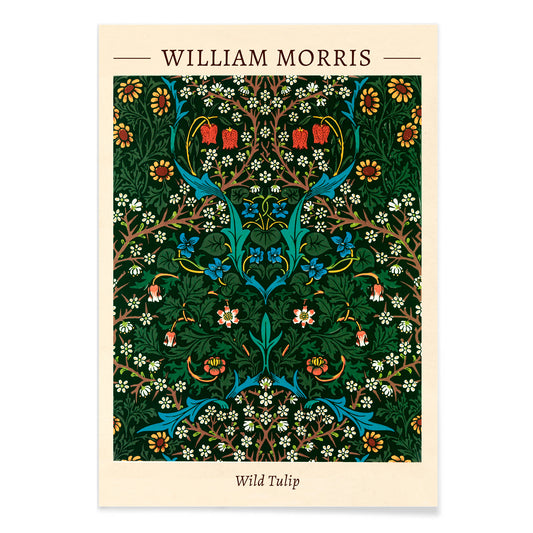
Wild Tulip Poster
William Morris · 1875 · Dense tulip and leaf botanical print in Arts and Crafts rhythm for a gallery wall
Poster from €9 · Framed from €16
-

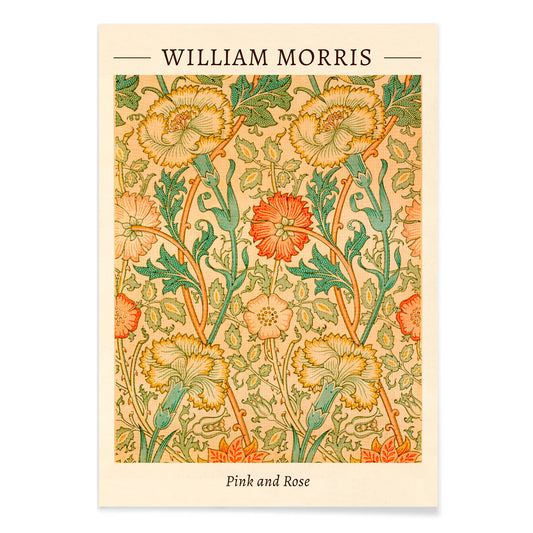
Pink and Rose Poster
William Morris · 1883 · Lush floral print with intertwined roses and foliage in warm vintage tones
Poster from €9 · Framed from €16


Arts and Crafts pattern as atmosphere
William Morris belongs to the moment when design became a moral argument. Late Victorian Britain was crowded with machine-made ornament, and the Arts and Crafts movement answered with a return to legible structure, honest materials, and the idea that decoration shapes daily life. Morris patterns hold a peculiar calm: dense gardens organized into repeat, where birds and stems move like a slow current. As a poster or art print, the same logic reads clearly on the wall, creating a field of rhythm rather than a single focal image. If you like design-led surfaces, the approach sits comfortably beside pared-back choices in Minimalist wall art.
From workshop methods to printed repeat
Morris trained his eye on medieval textiles, illuminated manuscripts, and vernacular craft, then pushed those sources through modern production without letting them turn slick. Many designs began as careful drawings, then were adapted for wallpaper or fabric using carved woodblocks and layered inks that keep outlines crisp while color remains slightly irregular. That balance is easy to read in Strawberry Thief (1883) by William Morris, where thrushes pull at fruit among thorny vines, and the repeat disappears into lively counterpoint. In Wallflower Pattern (1890) by William Morris, the blue ground behaves like architecture, holding pale blossoms in a measured lattice. For a broader frame around Morris and his contemporaries, Classic Art helps show how flat pattern resisted academic depth and illusion.
Using Morris posters in home decor
All-over compositions work best where you want the room to feel wrapped rather than punctuated: hallways, reading chairs, breakfast nooks, and bedrooms with linen and wool textures. Indigo-heavy prints pair naturally with oak, walnut, and brushed brass; sage and muted greens soften painted cabinetry and stone. Color-led browsing can start with Blue for tiles and textiles that echo Morris palettes, or Green for a quieter, plant-forward scheme. If the botanical subject is the anchor, Botanical adds natural history plates and foliage studies that keep the wall art grounded rather than purely ornamental. In kitchens, fruit repeats can sit near ceramics and timber without tipping into period-room staging.
Curating pairings, spacing, and frames
Morris patterns reward breathing room. A single statement print above a sideboard reads like a panel of wallpaper, while a second, smaller piece can act as a coda rather than competition. Wide mounts in off-white or flax tones make dense repeats feel intentional, and they give the eye a pause before the next field of leaves. For a gentle dialogue of movement and motif, hang Willow Bough by William Morris beside Four Fruits Pattern (1862) by William Morris; one flows like water, the other reads almost like pantry abundance organized into symmetry. In smaller rooms, Jasmine by William Morris keeps the arabesque softer and less weighty. Simple mouldings from Classic Frame keep attention on line and repeat, not on ornament around the edge.
What endures in the Morris worldview
Morris is often described as nostalgic, yet the lasting power is structural: wild gardens disciplined into repeat, color tuned to domestic light, and a belief that the everyday deserves considered form. Seen as vintage wall art, these prints carry depth without perspective tricks and pattern without noise. When you want to place Morris in a wider lineage of maker-led voices and signature styles, Famous Artists provides a useful next context for building a coherent gallery wall.